Scientific Background
Noxopharm’s Sofra platform is based on a recent groundbreaking discovery regarding how the immune system works – a discovery that has far-reaching potential for the development of new medicines.
The discovery was made at Hudson Institute of Medical Research, a leading Australian medical research organisation recognised internationally for discovery science and translational research.
Hudson Institute is home to Australia’s largest group of inflammation and immunity scientists and clinicians, and the discovery was made by Professor Michael Gantier, an expert in nucleic acids biology, working with several national and international teams of researchers.
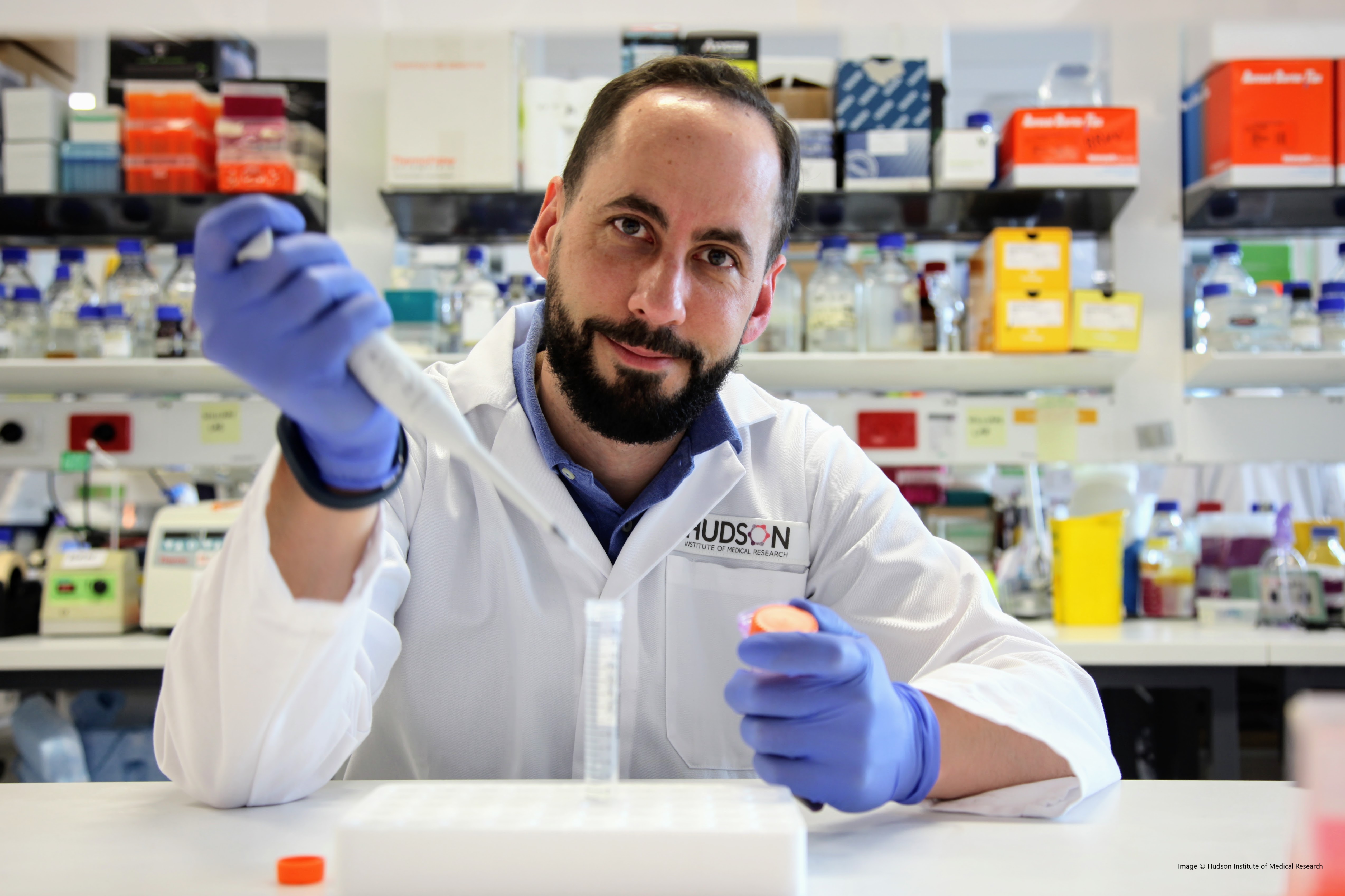
The partnership with Noxopharm is founded on this groundbreaking work, and a scientific paper outlining the discovery was published in Nature Immunology and is available here.
In summary, to protect us against infections, our immune system relies on special immune sensors inside our cells that act like security guards. Two such sensors that are very similar, called TLR7 and TLR8, selectively detect fragmented pieces of RNA that come from invading viruses or bacteria. Once these RNA fragments are detected, TLR7 and TLR8 sound the alarm, which leads to inflammation that, in turn, fights the infection.
Every day, billions of our cells quietly die and are replaced as part of our body’s natural housekeeping. This natural cell death also results in an abundance of RNA fragments. Curiously, these RNA fragments do not trigger the immune system in healthy people – and it is this fundamental question of why immune sensors such as TLR7 and TLR8 do not mistakenly sound the alarm from our own body’s RNA fragments that is at the heart of this discovery.
The team’s research discovered that some of our own RNA fragments carry a special chemical tag called 2′-O-methyl (2′-OMe). Critically, the team was able to demonstrate that these tagged RNA fragments bind in a different way to TLR7 and TLR8, effectively blocking their activation by other RNA fragments. Thus, this tag keeps the immune sensors in check, preventing false alarms by stopping them from overreacting to our own RNA fragments.
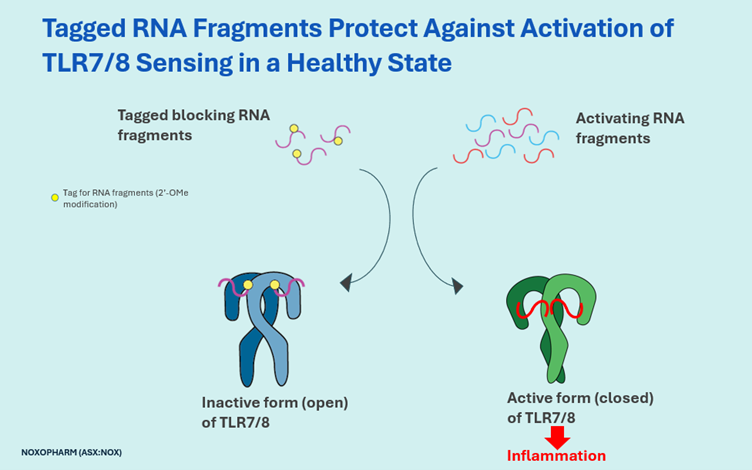
‘Tagged’ RNA fragments change the TLR7/8 receptors to an inactive configuration and block their activity versus non-tagged RNA fragments activate the receptors and cause inflammation.
This discovery is critically important as it provides a new explanation for the cause of some autoimmune diseases and opens the way for the development of innovative new medicines.
The work outlined above has become the foundation of Noxopharm's Sofra technology platform, enabling the company to create leading-edge new drugs that mimic the tagged RNA and are intended to restore the balance to a misfiring immune system by using the same natural mechanisms that the body employs.
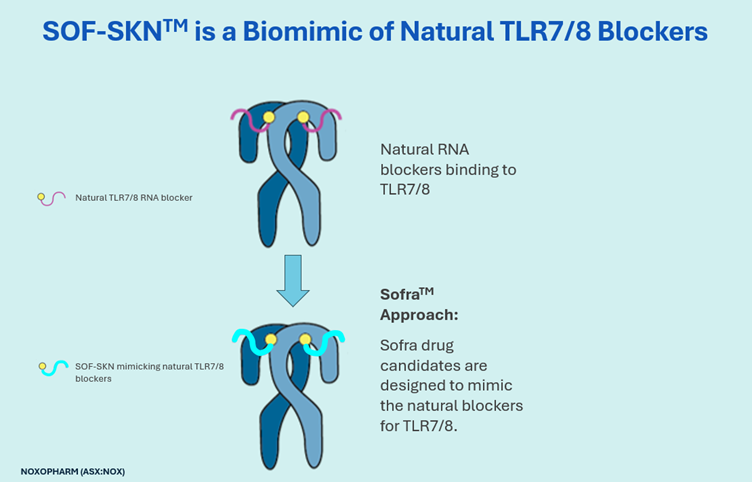
SOF-SKN mimics the natural RNA blockers of TLR7/8.
The implications of this technology are highly significant, as it can potentially be applied to a wide range of immune system-related diseases such as rheumatoid arthritis, lupus, psoriasis and diabetes, as well as other diseases like cancer that afflict millions of people worldwide.
Watch Noxopharm CEO Dr Olivier Laczka talk about the discovery here: https://youtu.be/e10z6QzZNno